
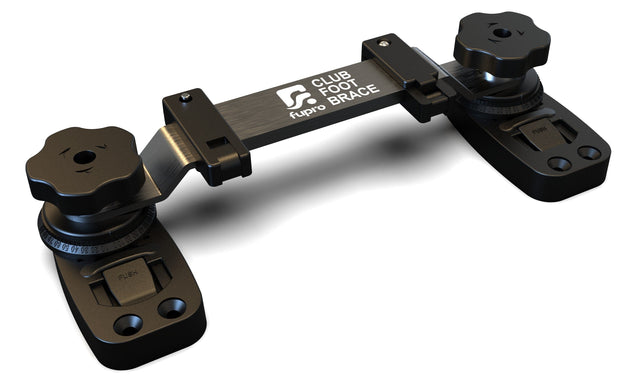
Clubfoot (Congenital Talipes Equinovarus) is a common pediatric condition in which the foot is twisted inward and downward. Modern treatment approaches, such as the Ponseti Method, rely on carefully designed orthotic solutions to correct and maintain proper foot alignment. The two key components of clubfoot bracing are shoes and bars, which work together to hold the feet in the corrected position during early childhood.
Shoes
Specialized clubfoot shoes are lightweight, durable, and designed to be worn for extended periods. They are typically made with open toes, high backs, and secure straps or laces to ensure proper fixation. These shoes attach directly to the bar and are essential for maintaining foot correction after casting.
Bars
The bar is a connecting device that holds both shoes at the proper angle and distance apart. Several types exist to accommodate different clinical needs and patient comfort:
- Dennis Browne Bar (DB Bar): The earliest and most well-known bar, consisting of a rigid metal bar with shoes attached at set angles.
- Fixed Bars: Provide a stable position for both feet with no movement.
- Articulated/Flexible Bars: Allow limited movement, making it easier for children to crawl, kick, and play while still maintaining correction.
- Dynamic Bars: Incorporate spring or hinge mechanisms that encourage natural leg movement and muscle activity while keeping feet aligned.
The Legacy of Dennis Browne
The concept of bracing for clubfoot correction can be traced back to Dr. Denis Browne (1892–1967), a pioneering pediatric orthopedic surgeon in the United Kingdom. He developed the Dennis Browne Bar, one of the first standardized devices for maintaining correction in clubfoot patients. His innovation laid the foundation for modern clubfoot orthotic solutions, influencing designs that are still widely used and refined today.
Why Clubfoot Solutions Matter
Effective bar-and-shoe systems are critical in preventing relapse after initial correction. By holding the feet in an externally rotated position, these devices allow tendons and ligaments to adapt, ensuring long-term correction. For families, they represent a simple yet powerful tool in giving children with clubfoot the chance to walk, run, and grow with confidence. clubfoot treatment solutions. Ponseti method clubfoot solutions

