
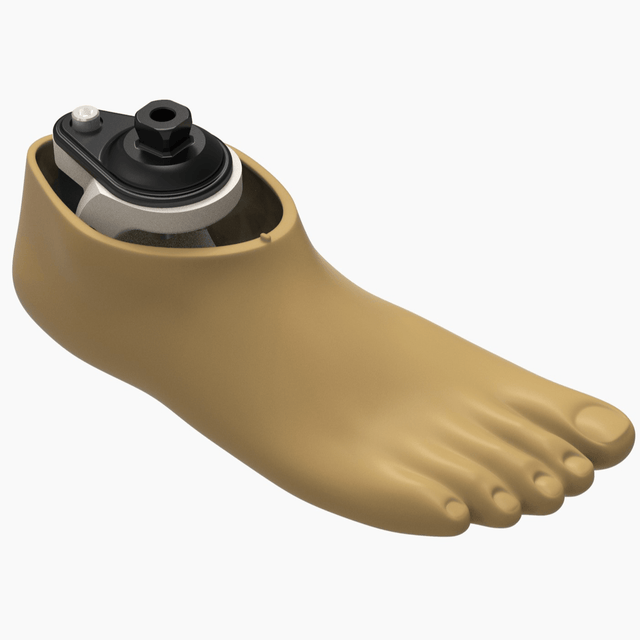
Prosthetic feet are a core component of lower limb prostheses, designed to restore mobility, stability, and balance for amputees. By replicating the function of a natural foot, they enable users to walk, stand, and perform daily activities with greater comfort and efficiency. Modern prosthetic feet range from basic, low-activity models to highly advanced, energy-storing and microprocessor-controlled systems—each tailored to different lifestyles and activity levels.
Types of Prosthetic Feet
-
SACH (Solid Ankle Cushion Heel) Feet
-
Simple, durable, and affordable design.
-
Provides cushioning through a foam heel but limited movement.
-
Commonly used for low-activity users or in resource-limited settings.
-
-
Single-Axis Feet
-
Feature a hinge at the ankle joint, allowing dorsiflexion and plantarflexion.
-
Improve stability, especially for new amputees or those with balance challenges.
-
-
Multi-Axis Feet
-
Allow movement in multiple planes (up-down, side-to-side, rotation).
-
Adapt well to uneven ground, reducing stress on the residual limb.
-
-
Dynamic Response / Energy-Storing Feet
-
Constructed from advanced composites such as carbon fiber.
-
Store energy during stance and release it during push-off, improving walking efficiency.
-
Ideal for active users and athletes.
-
-
Microprocessor-Controlled Feet
-
Incorporate sensors and powered ankle mechanisms.
-
Automatically adjust ankle position to adapt to slopes, stairs, and varying terrain.
-
Provide a more natural gait and reduce fatigue.
-
-
Specialized Feet
-
Designed for specific activities such as running, swimming, or high-impact sports.
-
Optimize performance and safety for recreational and professional athletes.
-
Why Prosthetic Feet Matter
-
Mobility: Enable walking and movement across diverse environments.
-
Stability: Provide balance and safety in daily activities.
-
Efficiency: Reduce energy expenditure with advanced designs.
-
Customization: Match user lifestyle, activity level, and personal goals.
Conclusion
Prosthetic feet represent the foundation of functional mobility for lower limb amputees. With a wide spectrum of options—from basic cushion-heel feet to cutting-edge microprocessor-controlled systems—clinicians can select the most appropriate foot to restore independence, enhance comfort, and support each user’s unique way of life.


